Glasses for Light Sensitivity: Everyday Comfort Basics
The world is full of bright offices, harsh headlights, and glowing screens that just seem made to make your eyes feel uncomfortable. Eyewear choices and small habit changes are often part of how people adjust to brightness and glare in day-to-day settings.
This article focuses on practical, non-medical information about how glasses are commonly used in relation to light sensitivity at work, at home, and outdoors. It is not a substitute for professional care, but it can give you general context for conversations with an eye care professional and help you think through your everyday options.
We will look at how different lenses, tints, and coatings relate to brightness and glare, and how some people pair glasses for light sensitivity with simple environment tweaks, like adjusting lighting and screens.
Peep this
We offer prescription glasses starting at $95, with free shipping and free returns
By the end, you will have a basic understanding of common comfort-focused eyewear features, general ways to adjust your surroundings, and when persistent sensitivity may be a sign to book an eye exam.
Understanding Everyday Light Sensitivity and Discomfort
Light sensitivity, often called photophobia, is a term used when typical light levels feel uncomfortably bright, including light sensitivity as eye discomfort or pain triggered by light, ranging from mild annoyance to strong aversion. In everyday life, that might look like squinting in supermarkets, preferring to avoid overhead LEDs, or disliking a very sunny commute.
Common non-medical situations that people associate with light-related discomfort include long hours on digital screens, glare from windows or car windshields, and spending time in spaces lit with very cool, bright LEDs. Digital eye strain is associated with symptoms such as tired eyes, headaches, and light sensitivity, especially when combined with poor posture or infrequent breaks.
It is important to recognize that while eyewear can change how bright or reflective your surroundings appear, it does not “cure” light sensitivity. Glasses and lenses are tools that can alter how light reaches your eyes. If your light sensitivity is sudden, severe, or worsens quickly, a comprehensive eye exam is essential to evaluate potential medical causes.
Farsighted?
We’ve got glasses (and contacts) for that
For ongoing, mild to moderate light-related discomfort, some people explore non-prescription options,such as lightly tinted lenses, reflection resistant coatings, and sunglasses in certain styles,to adjust how bright or reflective their environments feel, while still being able to see their surroundings.
Choosing Glasses for Light Sensitivity in Different Environments
Different glasses marketed for light sensitivity can have different design features. What you choose may depend on where you spend most of your time and what kind of light you tend to notice most.
Indoors, very dark sunglasses may make spaces feel quite dim. Some people instead gravitate toward clear or lightly tinted lenses with a reflection resistant coating for office or home use. This type of lens is often chosen by people who want to reduce reflections from screens and overhead lights without making everything look dramatically darker. Neutral gray or soft amber tints are commonly selected by people who prefer a subtle change in brightness while keeping colors fairly natural.
Outdoors, many people use polarized sunglasses to change how reflected light from water, roads, and glass appears. These lenses are commonly used by people who find reflections from these surfaces distracting. Medium tints, rather than the very darkest options, are often chosen by those who move through changing conditions like shade, clouds, or early evening.
Frame shopping, made smarter
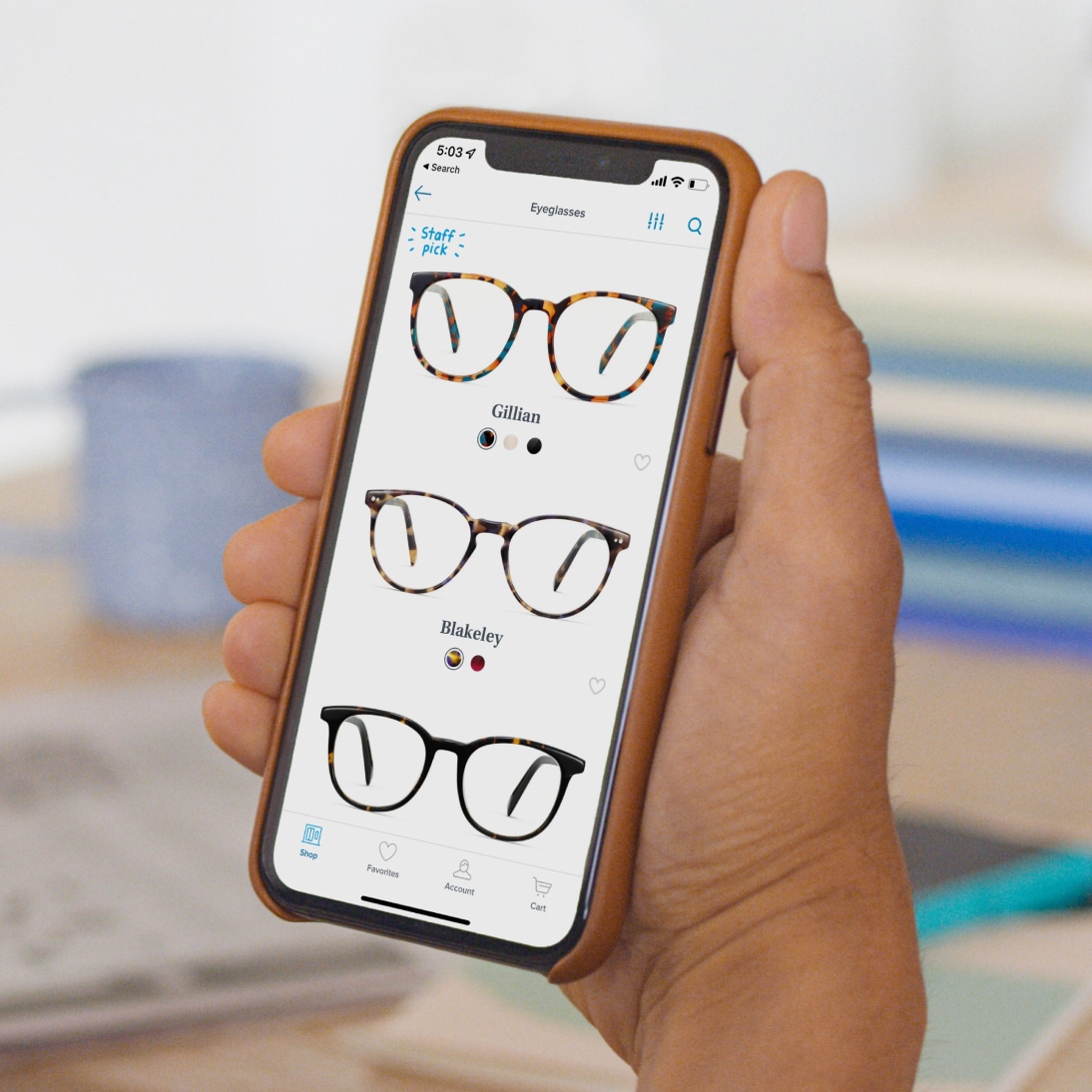
No guesswork needed—try on frames virtually and find your perfect pair
For people who move between very different light levels, photochromic lenses (sometimes called “transition” lenses) are designed to change tint in response to UV light. They may remain clearer indoors and become darker outdoors. They typically change more slowly inside a car, so some people still choose a dedicated driving pair with polarization if they are particularly bothered by reflections from headlights and the road.
Screen Time, Blue Light, and Everyday Eye Comfort
Because so much of modern work happens on screens, some people choose to pair glasses for light sensitivity with screen and workspace-related habits such as:
- Following the 20-20-20 guideline: every 20 minutes, look at something about 20 feet away for roughly 20 seconds.
- Adjusting screen brightness so it is closer to the surrounding room lighting, rather than using a very bright screen in a dark space.
- Reducing reflections by using matte screen accessories or repositioning lamps and screens relative to windows.
- Using warmer color temperature settings in the evening on phones, tablets, and computers, if preferred.
Final Thoughts on Glasses for Light Sensitivity (Non-Medical)
Addressing everyday light-related discomfort often involves a combination of factors: the eyewear you choose, how you set up your screens, and how you manage brightness and reflections at home and at work. Lightly tinted or polarized lenses, reflection resistant coatings, and certain frame styles are commonly chosen by people who want a different visual experience in bright or reflective environments.
If you are experimenting, you might start with relatively moderate changes such as soft tints, reflection resistant coatings, and basic ergonomic adjustments to your workspace before investing in multiple specialty pairs. Pay attention to which environments and eyewear options you tend to prefer, and use that as input for future conversations with an eye care professional.
If light sensitivity persists, worsens, or comes with pain or vision changes, schedule a comprehensive eye exam to check for possible underlying conditions. Otherwise, consider these ideas a general starting point, and talk with an eye care professional for personalized recommendations about lenses and frames.
Having problems reading?
If you’re struggling to bring words into focus, visit one of our expert optometrists for help
Legal Disclaimer
MEDICAL DISCLAIMER: This content is provided for educational and informational purposes only and is not intended as medical advice, diagnosis, or treatment. This information should not be used to replace professional medical care or consultation. Individual results may vary significantly. Always consult with a qualified healthcare provider before making any decisions about your health, vision, or medical treatment. Never disregard professional medical advice or delay seeking treatment because of information you have read on this website.
VISION CARE DISCLAIMER: Vision correction needs vary by individual. Consult an eye care professional for personalized assessment and recommendations.
FDA DISCLAIMER: These statements have not been evaluated by the Food and Drug Administration. This content is not intended to diagnose, treat, cure, or prevent any disease or medical condition.
PROFESSIONAL CONSULTATION REQUIRED: Only qualified eye care professionals can provide personalized recommendations for your specific vision needs and health conditions.
This article is for informational purposes only. It is not intended to provide medical advice or substitute for professional health services. Warby Parker complies with all HIPAA regulations regarding your health information. For personal health questions or concerns related to your vision or eyewear prescriptions, please consult a qualified healthcare provider.
Are glasses for light sensitivity different from regular sunglasses?
Some glasses marketed for light sensitivity use specific tints, coatings, or lens technologies that are intended to change how bright or reflective things appear, sometimes in ways that may be more comfortable for certain indoor or mixed-light situations than very dark fashion sunglasses. Exact features vary by product, so it can be helpful to review product descriptions or discuss options with an eye care professional.
Can I wear tinted glasses indoors every day?
Many people wear lightly tinted lenses indoors and feel that this works well for them, as long as the tint does not make their surroundings feel too dim. Very dark lenses are often avoided indoors because they can make spaces feel very dark, they can also contribute to sensitization and some people become more reliant on the darker lenses. Lighter, softer tins are recommended for more frequent use. For guidance tailored to your vision and daily activities, consult an eye care professional.
Do blue light glasses fix light sensitivity from screens?
Blue-light-filtering glasses do not “fix” light sensitivity from screens, and current research suggests their effects on visual fatigue and sleep are limited when compared with standard lenses. Some people still report preferring them in certain lighting conditions. Screen breaks, reducing reflections, and adjusting brightness and ergonomics are also commonly recommended as part of general digital device use practices.
What color tint is best for light sensitivity?
There is no single “best” color for everyone. Neutral gray or soft amber tints are popular for everyday use because many people feel they offer a subtle change to how bright environments appear. Some people explore more specialized tints with professional input, especially if they have specific visual or medical considerations.
Can I use glasses for light sensitivity while driving at night?
Some people choose clear lenses with reflection resistant coatings, or lenses with only very mild tints, when driving at night so that the road and surroundings do not appear overly dark. Because nighttime driving involves important safety considerations, it is a good idea to discuss your specific driving conditions and any light sensitivity concerns with an eye care professional before making changes to your eyewear.
When should I see a doctor about light sensitivity?
If your sensitivity is sudden, severe, mainly affects one eye, or comes with pain, redness, or vision changes, contact an eye care professional or other qualified health provider for prompt medical advice to evaluate possible underlying causes.
Need Glasses?
Shop prescription glasses starting at $95