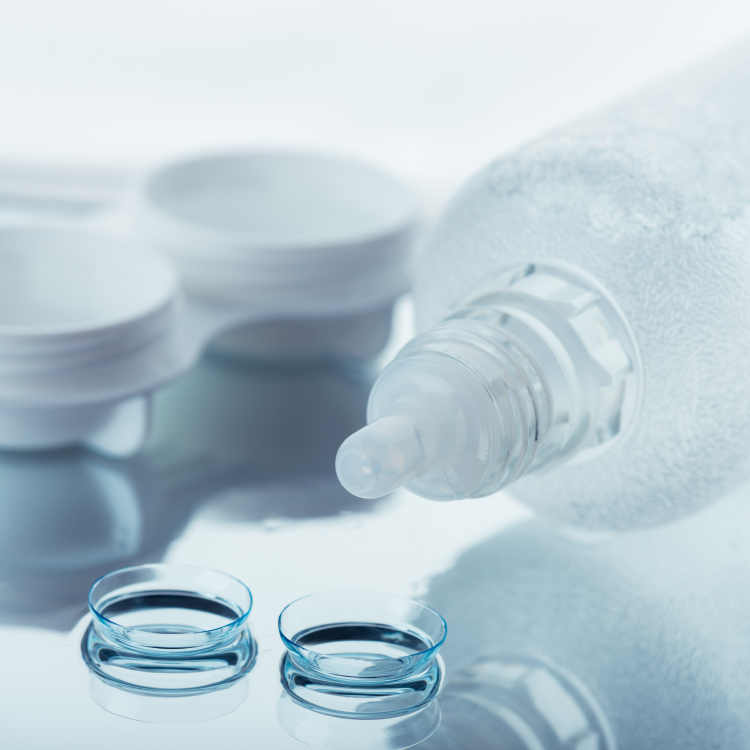
Contact solution protects your eyes by removing protein buildup and debris from your contacts. Unless you use daily disposable contacts, you probably also have contact solution—your contacts need solution in order to function properly.
If you don’t properly disinfect or clean your lenses as directed by your optician or eye doctor, your eyes can experience irritation or even infection as a consequence. That’s why it’s so important to always have solution on hand.
This article will dive into what contact solution does, what it’s in it, and the various solutions that contact wearers can use depending on their lens type.
What Is Contact Solution?
Contact solution is a chemical substance used to store and disinfect contact lenses. It removes bacteria, other germs, and dirt that may have collected on the lens throughout the day. Ridding the lenses of these particles makes them safe to wear, so you don’t have any eye problems when you put them in again.
What Is Contact Solution Made Of?
Contact solutions can contain disinfectants, surfactants, wetting solution, and preservatives. But how do these ingredients help take care of your lenses?
- Disinfectants: Disinfectants can kill the germs that may cause eye infections, including the major one to watch for, keratitis.
- Surfactants: Surfactants help to clear up any residue that’s stuck to the surface of the lens (without damaging the lens itself).
- Wetting solutions: True to their name, these solutions ensure that your contacts stay moistened and comfortable.
- Preservatives: Preservatives simply prolong the shelf life of your contact solution so you can keep using the same bottle—but be mindful of the expiration date.
Is Contact Solution Saline?
Contact solutions usually have saline in their formulas, but the two aren’t the same thing. Saline solution doesn’t disinfect like a multipurpose contact solution—instead, it rinses the lenses after they’ve been disinfected.
Some hygiene regimens require you to rinse your lenses with saline after they’ve been in contact solution and before you put them into your eyes. This final rinse removes any lingering particles from the lenses and prevents dryness.
Because saline doesn’t disinfect on its own, you should never replace your multipurpose or disinfecting contact solution with a saline solution.
Types of Contact Solutions
Each type of contact solution has a distinct purpose to suit different types of contacts. It’s important to note that some solutions should never be used with specific contacts, as they may damage the lens and/or hurt your eyes.
Talk with your optometrist about the best contact solution for you, depending on your lens type and ocular needs.
Daily Cleaning Solution
A daily cleaning solution removes dirt, deposits, and other particles from your lenses. However, it doesn’t disinfect them, nor should it be used for contact storage—you’ll need another solution for that.
Multipurpose Solution
A multipurpose contact solution can be used to clean, rinse, disinfect, and store your lenses. Instead of having one solution that cleans and another that rinses or disinfects, you get it all-in-one with this solution.
Hydrogen Peroxide Solution
Hydrogen peroxide solutions work similarly to multipurpose solutions, but they have specific care instructions to ensure that they don’t cause harm to your eyes. These solutions always require treatment with a neutralizing substance before you can wear your contacts. Be sure to follow all directions (both on the bottle and from your eye care provider), including never using hydrogen peroxide directly in your eyes.
Hydrogen peroxide solutions do not contain preservatives and are targeted toward contact wearers whose eyes may react to the preservatives in other solutions or who are more prone to dryness at the end of their contact replacement schedule.