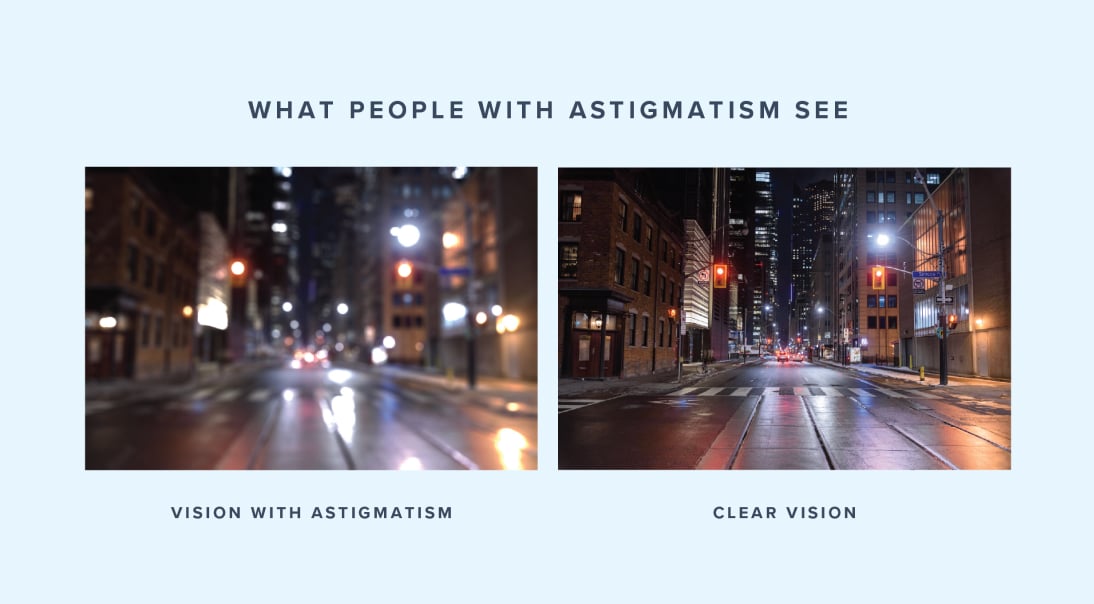
Astigmatism is a really common vision condition, affecting roughly 40% of people worldwide. It’s a refractive error, usually due to a misshapen cornea or eye lens that makes it difficult for your eye to focus.
But how do people with astigmatism see? That is, how does your uncorrected vision appear if you have astigmatism?
We’re here to let you know what astigmatism looks like to people who have it. We’ll explain what happens in an eye to cause astigmatism and how vision with astigmatism differs from normal vision. Then, we’ll let you know what you can do to correct astigmatism.
Having vision issues?
Get a comprehensive eye exam from one of our expert optometrists
The root cause of astigmatism is still being researched. However, we know that astigmatism tends to be something people are born with and may worsen as they age.
Find the best frames for your face.
With Advisor, get recommendations based on your facial features and personal style—just like you’re shopping in-store.
In someone with “normal” vision, the eye’s cornea and lens at the front of the eye have a round, spherical shape like a golf ball. This perfect orb helps the eye refract and focus light rays onto the retina at the back of the eye in one single point, creating a clear picture for you to “see.”
In an eye with astigmatism, the cornea (corneal astigmatism) or lens (lenticular astigmatism) has an irregular shape, more like an egg. This shape distorts the light coming into the eye, which distorts the image we see.
Astigmatism often happens in conjunction with refractive errors like myopia (nearsightedness), hyperopia (farsightedness), or presbyopia (age-related farsightedness). But astigmatism can happen on its own as well.
People with astigmatism generally have distorted vision. They don’t see things the way people with normal visual acuity do.
So, what does your vision look like if you have astigmatism? If you experience one or more of the vision problems listed below, it’s a good idea to get an eye exam, as you may have astigmatism. In rarer cases, you could have an eye injury or eye condition like keratoconus, which results in a thinning cornea with a more conical shape:
Double vision: In some cases, astigmatism could cause you to see a “doubling” of images, like two letters superimposed on one another.
Fuzzy or blurry vision: Astigmatism makes it difficult to see details, so things like reading can be challenging, whether it’s a piece of paper, subtitles on the TV, or a road sign up ahead of you.
It’s possible to have astigmatism but not be able to tell. For instance, you may have very mild astigmatism without noticeable symptoms. Or perhaps you’ve just gotten used to what astigmatism looks like. Young children, in particular, may not realize how the world appears with clear vision and many people with astigmatism go years before realizing that their vision is blurry, assuming everyone sees the way they do.
Astigmatism Correction
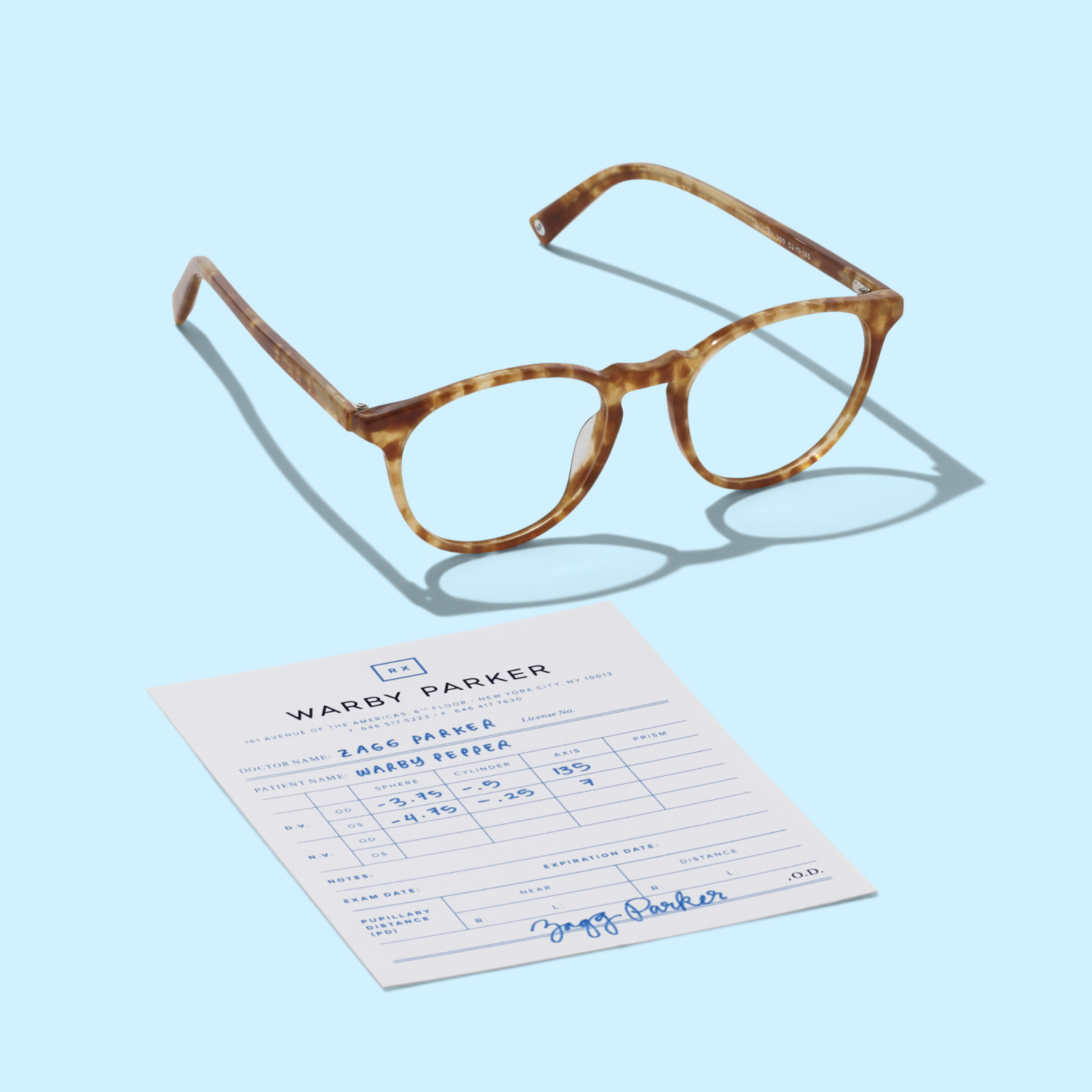
Astigmatism is usually easy to correct with glasses or contacts.
In some cases, you may wish to explore whether you are a candidate for laser eye surgery like LASIK eye surgery or cataract surgery to correct astigmatism.
For Eye Care, See an Eye Doctor
Whether you suspect astigmatism or not, anytime you experience a vision issue, make an appointment for an eye exam. Your eye doctor can check your vision, make sure your prescription is up-to-date, check for underlying eye conditions, and recommend treatment options. And for continued eye health, even without a vision problem, always keep up with your annual comprehensive eye exams.
The doctor will see you now
Get your annual eye exam from an expert optometrist at a nearby Warby Parker store.