Thin Lenses for High Prescriptions: How to Think About Edge Thickness
If you move to a stronger glasses prescription, you may notice that your frames feel heavier than you are used to, and your lens edges may seem thicker. Modern lens and frame options give you several ways to deal with these concerns.
This guide explains how to explore lens and frame options that are designed for higher prescription strengths. We will translate common optical terms into practical points you can keep in mind for your next eye exam or glasses consultation.
You will learn how thin lenses for high prescription strengths are typically designed, which lens materials can influence thickness, and how frame choice and lens design may affect how noticeable lens edges are.
By the end, you will have a clearer sense of what to ask your optometrist or optician so you can discuss frame and lens combinations that align with your preferences for look and feel.
Why High Prescriptions Are Often Associated With Thicker Lenses
To understand different approaches to lens thickness, it helps to know why lenses can appear thick in the first place. Minus lenses for nearsightedness (myopia) are thinnest in the center and thickest at the edge. As the prescription power increases, those edges bend light more, which requires more lens material and can increase edge thickness.
Lens thickness is directly related to refractive power and lens design, meaning stronger prescriptions and larger lens diameters generally trend thicker for the same material. The higher the diopters and the bigger the frame, the more noticeable the edges can become, especially in many minus lenses.
Looking for an expert's opinion?
Book an eye exam with one of our top-notch optometrists
Plus lenses for farsightedness (hyperopia) behave in the opposite way: they are thickest in the center and thinner at the edge. People with strong hyperopia may notice heavier-feeling, more prominent lenses that can change how the eyes appear through the lenses.
The key takeaway: you cannot change your prescription strength, but you can talk with your eye care professional about options for lens material, frame style, and lens design. Those choices play a major role in how thick lenses appear.
How High-Index Materials Relate to Lens Thickness
A common way to address lens edge thickness is to consider a high-index material. In simple terms, refractive index describes how efficiently a lens material bends light. The higher the index, the more light-bending you get from a given amount of material.
High-index lenses bend light more efficiently, which can allow a thinner lens for the same prescription strength. Compared with standard 1.50 plastic, commonly used high-index options (such as 1.60, 1.67, and 1.74) are typically manufactured to be slimmer at comparable prescriptions.
- Mild to moderate prescriptions (around -2.00 to -4.00): 1.59 to 1.60 lenses are sometimes selected by people who prefer lenses that may be slimmer than standard 1.50 plastic.
- Moderate to high prescriptions (around -4.00 to -7.00): 1.67 is often chosen by people who want a lens that can offer a slimmer profile, particularly in smaller frames.
- Very high prescriptions (beyond roughly -7.00): 1.74 may be selected by people who prioritize a thinner-appearing edge profile in certain frame styles, depending on preferences and budget.
At the same prescription power, a lens with an index of 1.74 may be significantly thinner than regular 1.50 plastic. That difference can be more apparent in higher myopic or hyperopic prescriptions.
Frame Size, Shape, and Design Considerations Related to Thickness
Material is not the only factor; frame choice has a significant impact on how thick your lenses may appear. Even a higher-index lens can look thicker in an oversized, wide frame.
Need new glasses?
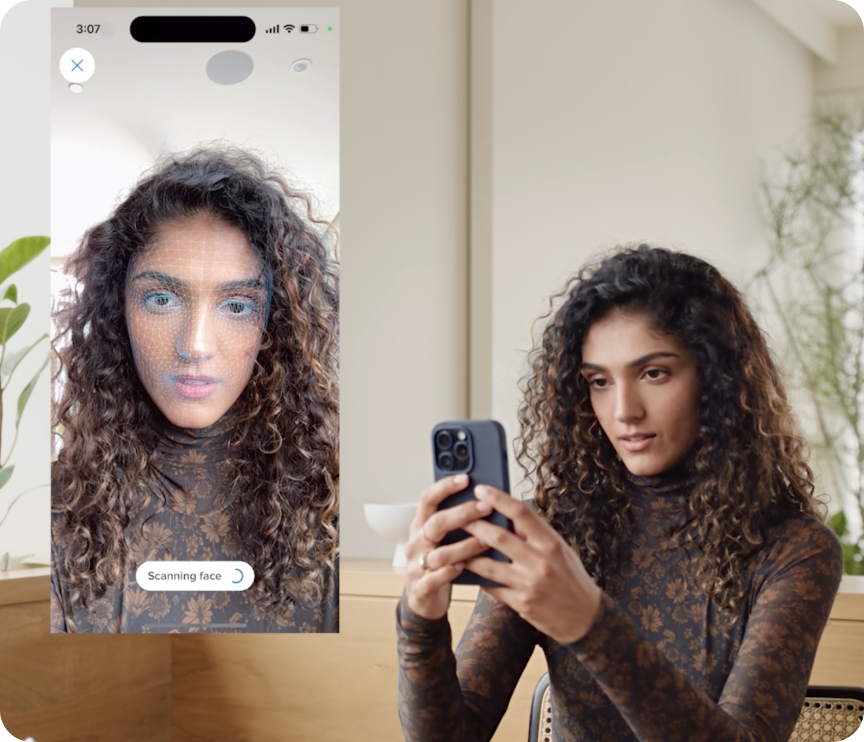
Vitually try on frames in the comfort of your own home
Narrower frames can help reduce how noticeable edge thickness appears in strong prescriptions. A smaller lens diameter means less overall lens area, which can limit edge buildup in many minus lenses.
When you are thinking about how lenses might look in a higher prescription, it can be helpful to discuss these general design points with your eye care professional:
- Smaller, rounder frames: These shapes often keep the lens diameter down, which may help limit edge thickness in many minus lenses.
- Full-rim styles: A full rim can visually mask lens edges; both metal and acetate rims are commonly used for higher prescriptions.
- Frame size and shape: Larger, square, or rimless designs may make lens thickness more noticeable in some prescriptions.
Final Thoughts on Thin Lenses for High Prescription
Working toward thinner-looking lenses for a high prescription usually involves combining several choices rather than relying on a single feature. Strong prescriptions often lead to thicker lenses, but you can work with your eye care professional to consider high-index materials, frame shapes, and lens designs that may help you reach your style and appearance goals.
At your next appointment, you can talk through index options, frame size, and lens coatings with your eye care professional. A few informed decisions can help you select a frame and lens combination that aligns with your style preferences and how you would like your glasses to look and feel.
Frequently Asked Questions
Are high-index thin lenses for high prescription really worth the cost?
How people feel about high-index lenses can vary. For moderate to very high prescriptions, high-index lenses are often chosen by people who prefer a slimmer edge profile and potentially lighter-feeling lenses compared with many standard plastic options. For mild prescriptions, the visible difference in edge thickness may be smaller, so some people choose based on budget and personal preference.
What index do people with a -6.00 prescription often consider?
People with prescriptions around -6.00 frequently discuss 1.67 lenses with their eye care professional as an option that may balance a slimmer profile and cost. Some people who prefer thinner-looking lenses or larger frame styles may also ask about 1.74. The most appropriate choice depends on your specific prescription, frame selection, budget, and preferences.
Add a pair and save
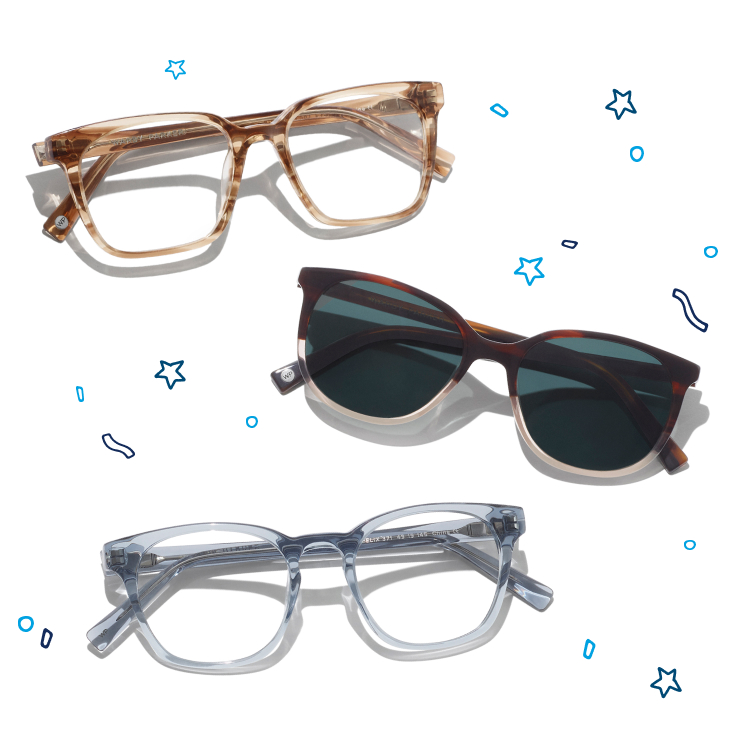
Buy one prescription pair and save 20% on additional pairs—eyeglasses or sunglasses!
How can I make my minus lenses look less thick at the edges?
People who want lenses that may appear less thick at the edges often talk with their eye care professional about combining several factors, such as a higher-index lens material, a relatively smaller full-rim frame, and lens coatings like anti-reflective options. In contrast, oversized or rimless styles may make lens edges more noticeable in some higher prescriptions.
Do high-index lenses affect vision quality?
High-index lenses may show more reflections and color fringing than some standard materials, which is why an anti-reflective coating is commonly recommended. Many wearers report that they adapt to these lenses and that they like the slimmer appearance. Your eye care professional can explain potential tradeoffs for your specific prescription.
Can plus lenses for farsightedness be made to look thinner too?
High-index materials for plus prescriptions are designed to address center thickness compared with many standard plastic lenses at the same power. Smaller, round frames and certain lens designs can also influence whether lenses appear flatter and less prominently curved.
Is polycarbonate the thinnest option for strong prescriptions?
Polycarbonate or 1.60 is typically thinner than many standard plastic lenses and is often chosen for impact resistance. However, some 1.67 and 1.74 high-index plastics are manufactured to be slimmer at similar prescription strengths. The right material depends on multiple factors, including prescription, frame choice, lifestyle, and safety needs.
Legal Disclaimers
MEDICAL DISCLAIMER
This content is provided for educational and informational purposes only and is not intended as medical advice, diagnosis, or treatment. This information should not be used to replace professional medical care or consultation. Individual results may vary significantly. Always consult with a qualified healthcare provider before making any decisions about your health, vision, or medical treatment. Never disregard professional medical advice or delay seeking treatment because of information you have read on this website.
VISION CARE DISCLAIMER
Vision correction needs vary by individual. Consult an eye care professional for personalized assessment and recommendations.
FDA DISCLAIMER
These statements have not been evaluated by the Food and Drug Administration. This content is not intended to diagnose, treat, cure, or prevent any disease or medical condition.
PROFESSIONAL CONSULTATION REQUIRED
Only qualified eye care professionals can provide personalized recommendations for your specific vision needs and health conditions.
This article is for informational purposes only. It is not intended to provide medical advice or substitute for professional health services. Warby Parker complies with all HIPAA regulations regarding your health information. For personal health questions or concerns related to your vision or eyewear prescriptions, please consult a qualified healthcare provider.
Need Glasses?
Shop prescription glasses starting at $95