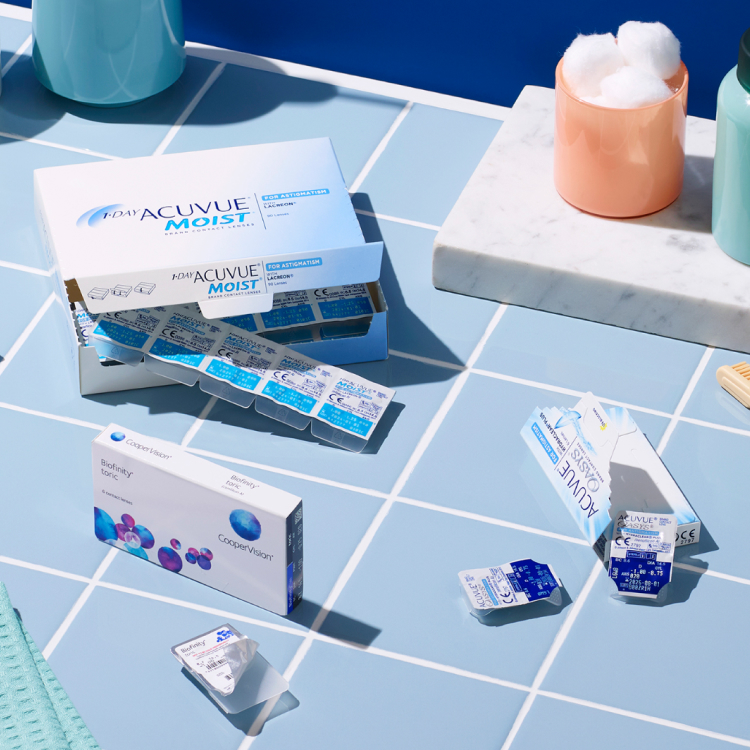
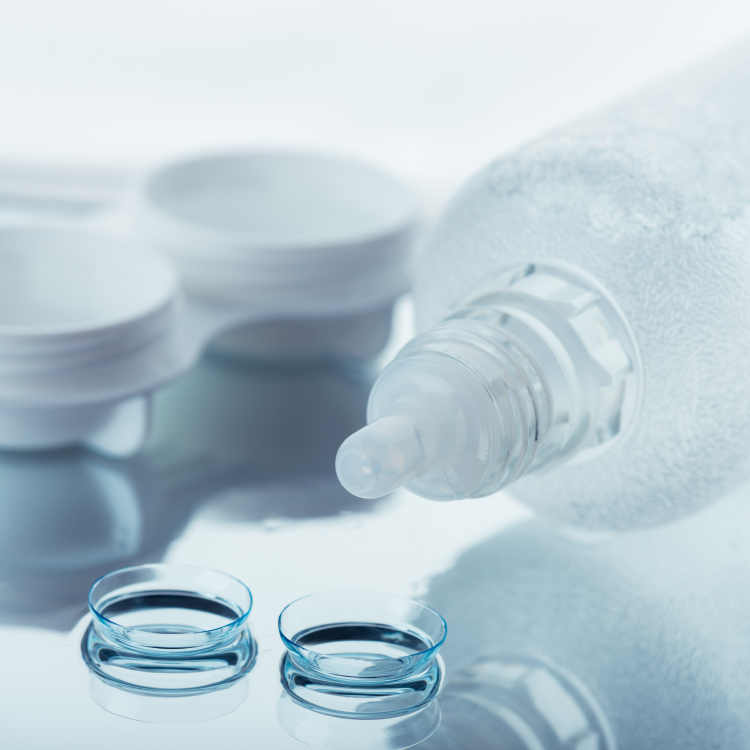
Wearing contact lenses requires consistent, careful hygiene. Eyes are sensitive, and proper handling reduces dryness, irritation, and contamination, especially when wearing makeup.
Regular eye exams help confirm lens fit and overall eye health, and it’s always vital to avoid common pitfalls such as touching lenses with unwashed hands, sleeping in lenses not approved for overnight wear, exposing lenses to water, and skipping lens case cleaning.
Before you start, ask yourself:
- Are your lenses cleaned and stored in fresh solution every day?
- Do you schedule annual eye exams?
- Do you replace your lens case every 1 to 3 months?
- Are you aware of proper lens handling practices (no water, clean hands, correct wear time)?
- Do you insert lenses before makeup and remove lenses before makeup removal?
Consistent hygiene and fit checks reduce the risk of irritation and infection when combining contact lenses and makeup.
Choosing the Right Makeup Products
Selecting gentle, low-flake formulas helps prevent particles from entering eyes or sticking to lenses. Hypoallergenic, fragrance-free, and water-based or waterproof options are often more comfortable for sensitive eyes. Avoid heavy glitter and fiber-rich formulas that shed.
For foundation, choose hypoallergenic and fragrance-free formulations to limit exposure to known irritants. For eye makeup, water-based and fragrance-free options contain fewer volatile components near the ocular area. Waterproof or “tubing” mascaras form a film around lashes, which may reduce particulate shedding. When it comes to eyeliner, pencil or gel formulas are preferred; avoid waterline use to reduce contact with meibomian gland openings. Cream or tightly pressed powder eyeshadows have lower fallout compared to loose powders. For makeup removal, oil-free, micellar, or bi-phase removers work with less mechanical friction. Alcohol-free setting sprays in a fine mist avoid additional exposure to drying solvents. If using lash adhesives, choose latex-free, low-fume formulas to reduce exposure to common sensitizers.
Additional tips:
- Skip loose glitter or chunky shimmer near the eyes.
- Choose non-fiber mascaras to minimize flaking.
- Clean brushes and applicators regularly to limit buildup.
Heading to a meeting? A tubing mascara resists smudging and flaking, keeping lenses clear if your eyes water.
Application Techniques for Contact Lens Wearers
Insert lenses before applying makeup to minimize contamination. Keep products away from the inner rim of the eyelids and allow liquids to dry fully before blinking.
How to apply:
- Wash and dry hands thoroughly.
- Insert contact lenses.
- Apply face products first, keeping creams away from the lash line.
- Use eyeshadow with minimal fallout; tap off excess or use cream formulas.
- Apply eyeliner above the lash line; avoid tightlining on the waterline.
- Apply mascara from mid-lengths to tips, avoiding the base of lashes.
- Let mists and liners dry completely before opening eyes fully.
- At the end of the day, remove lenses first, then remove makeup with an oil-free remover.
Inserting lenses first reduces contamination, though it requires completely dry hands before touching makeup. Avoiding tightlining prevents product transfer onto lenses, even though it may create a slightly different aesthetic look. Applying eyeliner above the lash line is a safer placement away from the tear film. Cream shadows produce less fallout than loose powders during application and wear, though they can crease if over-applied.
Maintaining Eye Health with Contact Lens and Makeup Use
Limit buildup on lenses and tools, and particle exposure with consistent product care and timely replacements. Choose low-shed formulas and keep tools clean.
Key practices for eye safety:
- Use mineral-based or tightly pressed powders to reduce fallout.
- Replace makeup regularly (mascara approximately every 3 months, liquid liner every 3 to 6 months, shadows every 12 to 24 months).
- Verify product expiration dates and discard if texture or smell changes.
- Clean brushes and sponges at least weekly; use single-use applicators if irritated.
- Do not share eye products or applicators.
- Replace lens solution daily; never use water or saliva on lenses or cases.
- Replace lens cases every 1 to 3 months and air-dry face down between uses.
- If you notice itchiness, redness, or sudden discomfort, remove lenses and reassess products or consult an eye care professional.
If a new eyeliner causes stinging or buildup on lenses, stop using it immediately, clean lenses with fresh solution, and switch to a fragrance-free, water-based formula.
Clean tools, timely product replacement, and proper lens care work together to keep the eyes comfortable and lenses more clear.
Key Takeaways
Makeup and contacts are highly compatible, if you follow the right guidelines. Here is a useful cheat sheet:
- Lenses in first
- Skip the tightline
- Go hypoallergenic
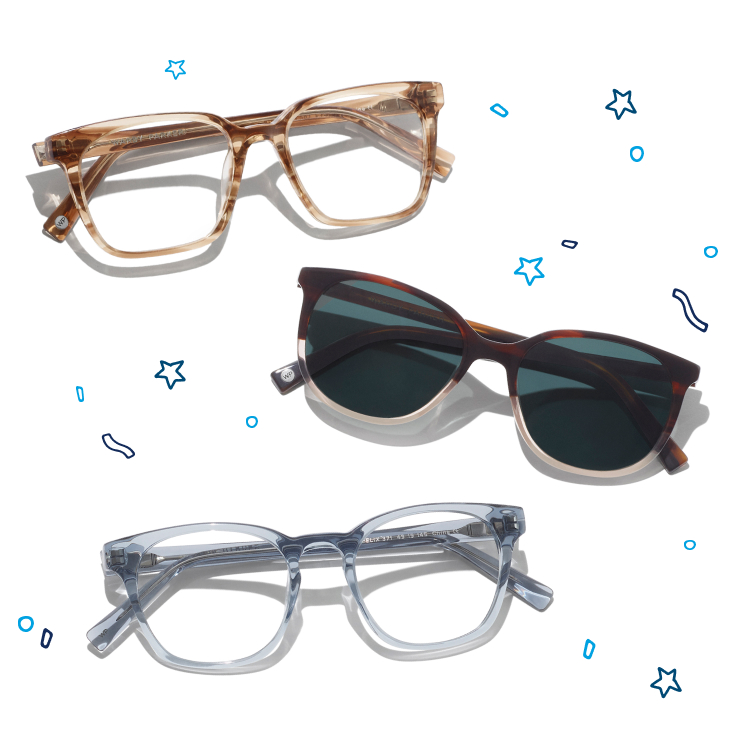
Level up your eye game: try on fresh frames and keep those exams on the calendar. Beauty and health can work together.
Frequently Asked Questions
What type of makeup is recommended for contact lens wearers to reduce eye irritation?
Contact lens wearers should use hypoallergenic makeup products. These are specially formulated to reduce the risk of irritation or allergic reactions, which can be more common when using lenses. Always look for labels indicating the product is safe for sensitive eyes.
Why is it important for contact lens users to choose hypoallergenic makeup?
Hypoallergenic makeup is crucial for contact lens wearers because it significantly lowers the chances of irritation or allergic reactions around the eyes. This type of makeup is designed to be clean and gentle, allowing you to comfortably wear your lenses with less risk of discomfort or potential infections.
How can I reduce the affect of my makeup on my contact lenses during application?
To reduce the risk of makeup affecting your contact lenses, always insert your lenses before applying makeup. Use hypoallergenic products and avoid powdery eyeshadows and eyeliners as they can flake and irritate the eyes. Also, avoid applying makeup close to the waterline.
What distinguishes hypoallergenic makeup from regular makeup for contact lens wearers?
Hypoallergenic makeup differs from regular makeup in that it is specifically formulated to be more gentle and less likely to cause irritation. This is particularly important for contact lens wearers who are more susceptible to irritation and allergies due to increased sensitivity around the eyes.
What common issues do contact lens wearers face with the wrong makeup, and how can hypoallergenic options help?
Contact lens wearers often encounter problems like eye redness, irritation, and allergic reactions with unsuitable makeup. Hypoallergenic products help mitigate these issues by being formulated to be gentle and less likely to cause such reactions, offering a safer alternative for sensitive eyes.
Legal Disclaimer
MEDICAL DISCLAIMER: This content is provided for educational and informational purposes only and is not intended as medical advice, diagnosis, or treatment. This information should not be used to replace professional medical care or consultation. Individual results may vary significantly. Always consult with a qualified healthcare provider before making any decisions about your health, vision, or medical treatment. Never disregard professional medical advice or delay seeking treatment because of information you have read on this website.
VISION CARE DISCLAIMER: Vision correction needs vary by individual. Consult an eye care professional for personalized assessment and recommendations.
FDA DISCLAIMER: These statements have not been evaluated by the Food and Drug Administration. This content is not intended to diagnose, treat, cure, or prevent any disease or medical condition.
PROFESSIONAL CONSULTATION REQUIRED: Only qualified eye care professionals can provide personalized recommendations for your specific vision needs and health conditions.
This article is for informational purposes only. It is not intended to provide medical advice or substitute for professional health services. Warby Parker complies with all HIPAA regulations regarding your health information. For personal health questions or concerns related to your vision or eyewear prescriptions, please consult a qualified healthcare provider.