How Glasses Work: An Evolution of Glasses Through the Ages
Updated: February 1, 2026
With prescription glasses so readily available nowadays, it’s easy to forget how far we’ve come. The simple spectacles on your nose are the product of centuries of innovation in optics, design, and vision correction. In this journey, we’ll trace the evolution of glasses—from ancient magnifiers to today’s sun-light-filtering lenses. And we’ll see how Warby Parker carries that inventive spirit forward with stylish frames, high-tech lenses, and a modern approach to accessibility. Let’s take a look (pun intended).
Ancient Vision Aids: From Emeralds to Reading Stones
Long before glasses as we know them existed, people were already looking for ways to sharpen their sight. In ancient Rome, Seneca reportedly read books through a glass globe of water, while Emperor Nero used a polished emerald to watch gladiator fights—a very literal gem of a lens.
By the early medieval period, scholars in the Islamic world developed reading stones—rounded glass magnifiers that laid flat on text to enlarge letters. These tools only helped farsighted readers, but they laid the foundation for vision correction. In the 11th century, Ibn al-Haytham’s *Book of Optics* explained how light and vision worked, paving the way for wearable glasses.
The First Eyeglasses: 13th-Century Spectacles
Wearable eyeglasses first appeared around the late 1200s, most likely in Italy. These early specs were two convex lenses framed in wood or leather, designed to rest on the nose or be held in place—no arms, no temples, just handheld magnifiers turned wearable. They mostly helped with presbyopia (age-related farsightedness), so if you were nearsighted, you were still out of luck.
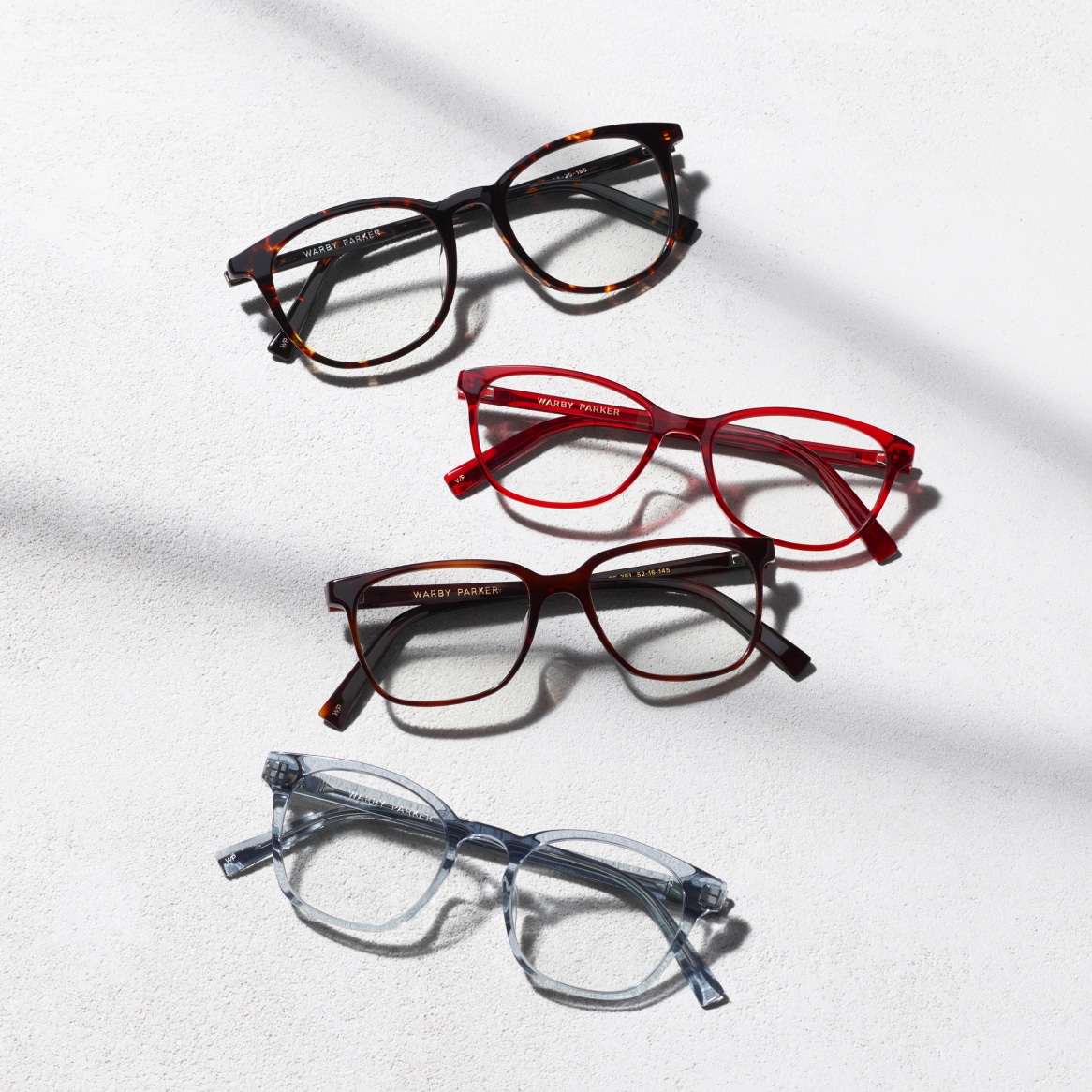
Find the best frames for your face.
With Advisor, get recommendations based on your facial features and personal style—just like you’re shopping in-store.
Glasses spread quickly among monks and scholars, particularly in glassmaking hubs like Venice. With no prescription standards, people selected lenses by trial and error—an early version of the in-person try-on. It wasn’t perfect, but it was progress.
Renaissance Refinements: Printing, Pinching, and Optics
The printing press changed everything. As books became more accessible in the 15th century, so did the demand for reading glasses. Mass-produced lenses hit the streets—literally—sold by street vendors, often matched to buyers by age, not prescription. It was a rough system, but one that helped democratize vision correction.
During this time, we also got new styles. The *pince-nez* (French for “pinch-nose”) gripped the bridge of your nose with a spring-loaded clamp—hands-free but not especially comfy. And in the 1600s, astronomer Johannes Kepler finally explained how lenses work: concave for nearsightedness, convex for farsightedness. That breakthrough allowed lens makers to create more specific corrections and, for the first time, address myopia effectively.
Customized Fit Begins: Early Prescriptions
By the late 1600s, opticians began experimenting with custom prescriptions using trial lens kits. It wasn’t exactly a modern eye exam, but it moved glasses away from one-size-fits-all and toward the personal fit we expect today.
18th–19th Century: Bifocals, Astigmatism, and Ear Hooks
In 1727, optician Edward Scarlett added rigid sidepieces (or “temples”) to frames, allowing glasses to rest over the ears—a major comfort upgrade from nose-perching.
A few decades later, Benjamin Franklin—tired of juggling two pairs of glasses—combined reading and distance lenses into one frame. Thus, bifocals were born. Franklin’s solution changed the game for people with presbyopia and inspired later innovations like progressive lenses.
In 1827, English scientist Thomas Young developed lenses to correct astigmatism—a major advancement for people with irregular corneas. Around the same time, lighter materials like steel wire allowed frames to be thinner and more comfortable. And as industrial manufacturing ramped up, glasses became more affordable and widespread.
By the late 1800s, eyewear began to cross into fashion. Frames were offered in varied shapes, materials, and even early plastics. Glasses were no longer just tools—they were starting to express personality.
20th Century: Lightweight Plastics and Lens Tech
For centuries, lenses were made of glass—optically clear but heavy and breakable. In the 1940s, plastic lenses arrived. CR-39 was the first lightweight alternative, and polycarbonate followed with even more durability and impact resistance. (Warby Parker uses polycarbonate lenses for just that reason.)
Next came lens coatings. Anti-reflective (AR) coatings, originally developed for military optics, entered consumer use after WWII. They reduce glare, make lenses more transparent in photos, and improve clarity—especially at night or on screens. Scratch-resistant coatings became widespread too, and UV filtering became common.
Photochromic lenses (which darken in sunlight and clear indoors) debuted in the 1960s, giving people the convenience of eyeglasses and sunglasses in one. Meanwhile, labs began producing lenses with greater precision and thinner profiles, especially for strong prescriptions.
Sunglasses as we know them exploded in the 20th century. Sam Foster introduced inexpensive, stylish shades in 1929. A few years later, aviator sunglasses were designed for military pilots to block intense glare. Edwin Land followed with polarized lenses in 1936—filters that cut reflected light for improved vision outdoors. Today’s sunglasses offer UVA and UVB filtering, scratch resistant and AR coatings, and often polarization for greater clarity.
The Warby Parker Connection: Classic Innovation, Modern Ease
Eyewear has always been about two things: helping people see better and making glasses more comfortable and wearable. Warby Parker was founded on those same values, with a goal of making great glasses affordable, stylish, and easy to get.
Where others saw a complicated, expensive process, Warby Parker simplified things. Our Virtual Try-On program lets you test endless frames at home—for free. Want to see how they feel during a work meeting or a coffee run? That’s the idea. It’s a high-tech, low-pressure version of the 1500s street vendor try-on—no squinting into a market mirror required.
We also embrace the legacy of innovation through every lens we offer. Franklin’s bifocals? We now offer progressives that accommodate multiple focal distances in a single lens—no bifocal line needed. Thomas Young’s astigmatism correction? Still going strong, now made with high-index plastics that are lightweight and powerful.
Our sunglasses? They inherit the DNA of early aviators and polarized pioneers, but with sleek designs and full UV protection built in. Every pair of Warby Parker sunglasses is crafted to look great and perform exceptionally well, with optional polarization to reduce glare on water, roads, or snow.
Design That Honors the Past, Built for the Future
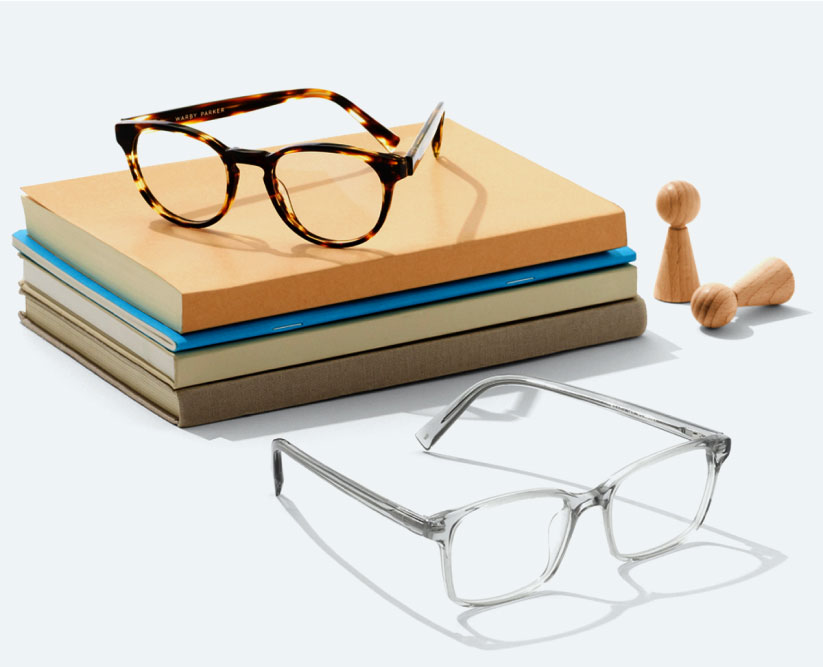
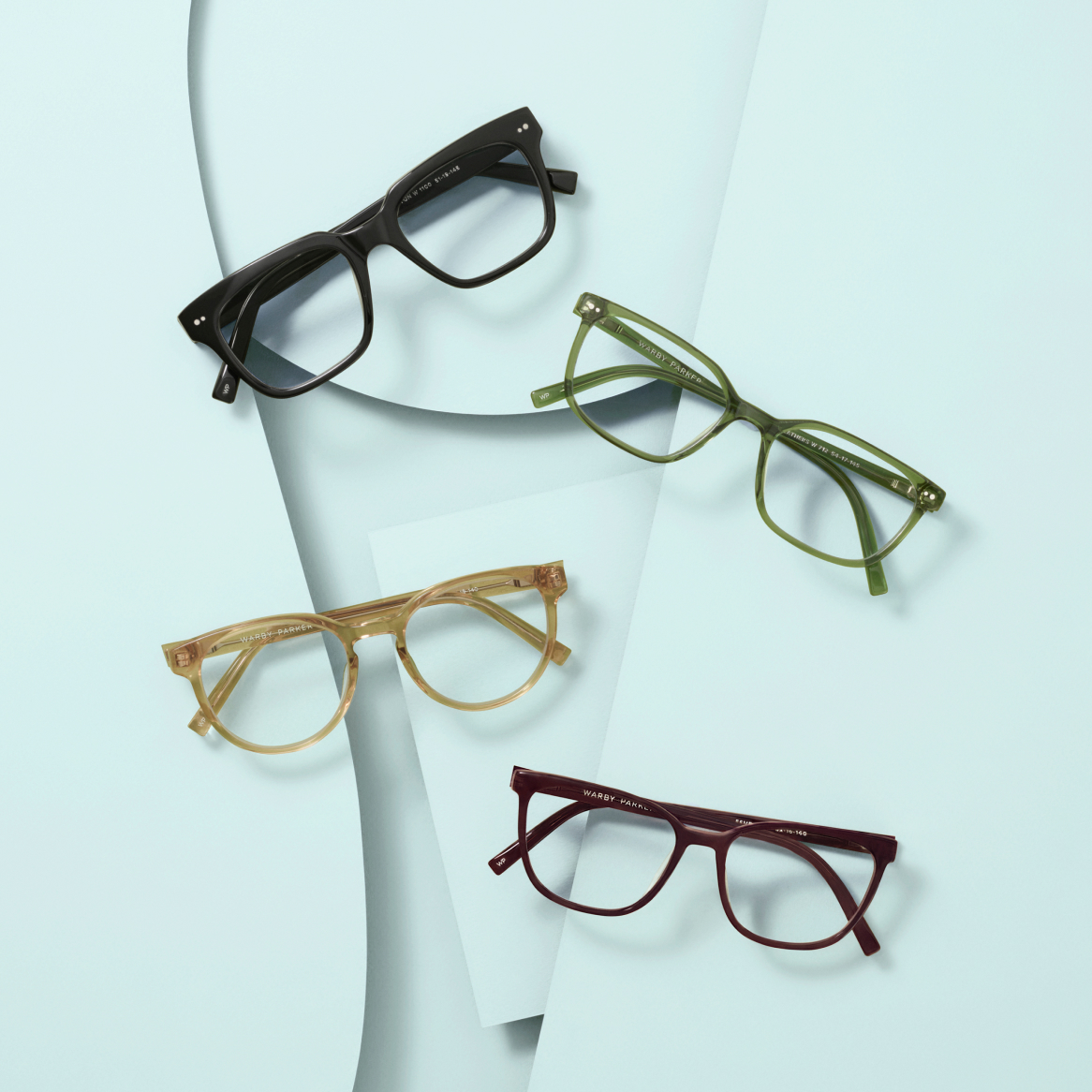
Eyewear has become a fashion statement—and Warby Parker embraces that with designs that remix classic silhouettes from every era. Think 1950s cat-eyes with a modern update, or mid-century wireframes reborn in titanium. Our glasses start at just $95 (including prescription lenses with scratch-resistant, reflection reducing, and UV-filtering coatings), combining innovation with accessibility.
And we don’t stop at style. Our frames are made with durable, lightweight materials—like hand-polished cellulose acetate or ultra-light TR-90 nylon—and engineered for all-day comfort. From scholarly to playful, bold to understated, we’ve got styles that honor history and move it forward.
Vision for All: Giving Back with Every Pair
One last tradition we’re proud to carry on? Making glasses more accessible. For every pair of Warby Parker glasses sold, we donate a pair to someone in need through our Buy a Pair, Give a Pair program. To date, over 15 million pairs have been distributed around the world. Because clear vision shouldn’t be a luxury—it should be a given.
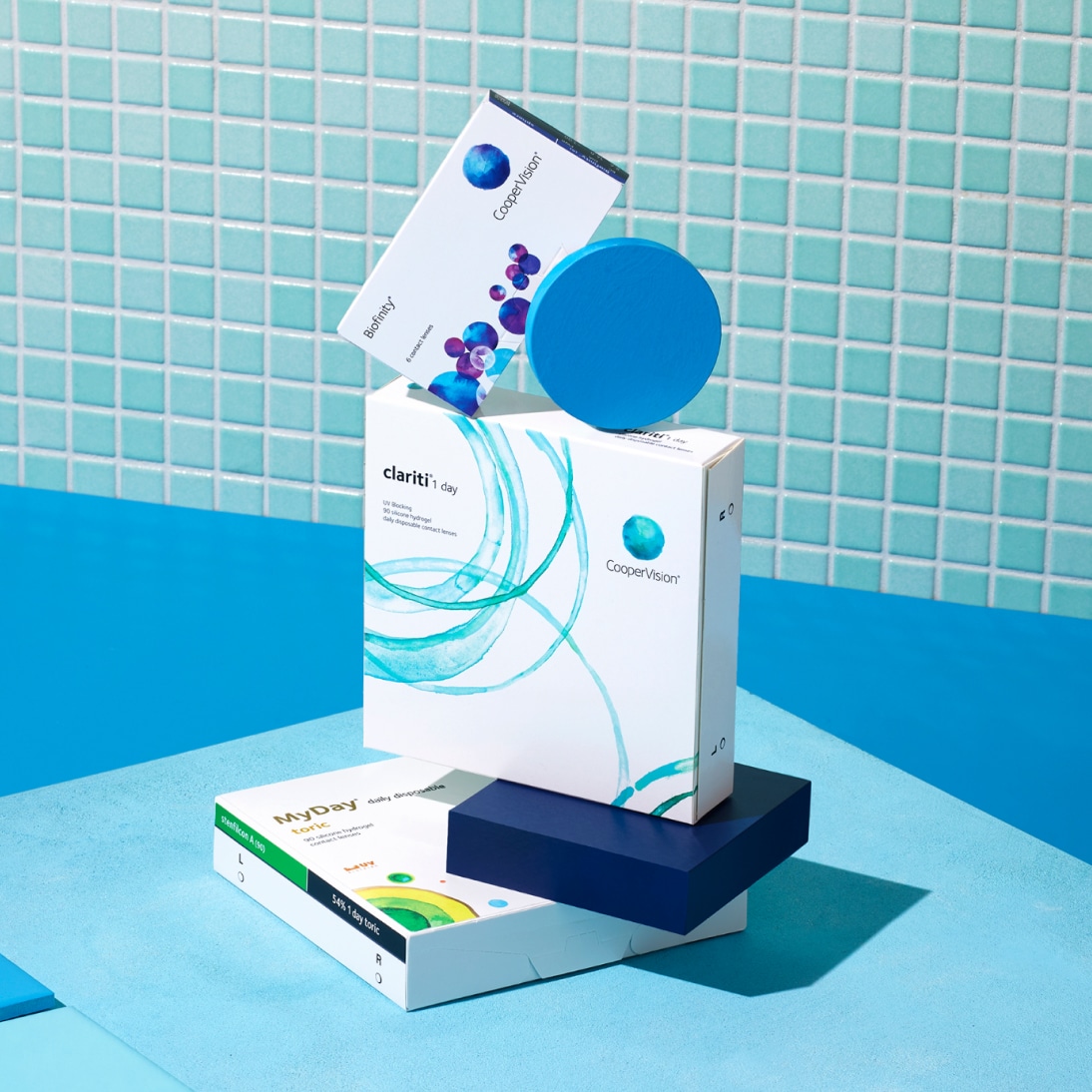
Want to ditch the solution?
Enjoy a fresh pair of contacts daily’no solution required.\r\n\r\nCheck out our selection of daily contacts lenses.
So there you have it. Eight centuries of experimentation, innovation, and style—culminating in the glasses you wear today. Whether you’re rocking vintage-inspired round frames or sleek sunglasses, you’re part of a long line of curious thinkers, daring designers, and everyday vision-seekers.
At Warby Parker, we’re proud to be one chapter in this ongoing story—reimagining what glasses can do, how they can feel, and who they’re for. The spirit of innovation that gave us reading stones, bifocals, and polarized shades lives on in every pair we craft.
And the future? It’s looking pretty clear.
Legal Disclaimer
*MEDICAL DISCLAIMER: This content is provided for educational and informational purposes only and is not intended as medical advice, diagnosis, or treatment. This information should not be used to replace professional medical care or consultation. Individual results may vary significantly. Always consult with a qualified healthcare provider before making any decisions about your health, vision, or medical treatment. Never disregard professional medical advice or delay seeking treatment because of information you have read on this website.*
*FDA DISCLAIMER: These statements have not been evaluated by the Food and Drug Administration. This content is not intended to diagnose, treat, cure, or prevent any disease or medical condition.*
*PROFESSIONAL CONSULTATION REQUIRED: Only qualified eye care professionals can provide personalized recommendations for your specific vision needs and health conditions.*
*VISION CARE DISCLAIMER: Vision correction needs vary by individual. Consult an eye care professional for personalized assessment and recommendations.*
This guide is for informational purposes only and does not constitute medical advice. For vision concerns or prescription needs, please consult with a qualified eye care professional. Warby Parker complies with all applicable regulations regarding health information and customer privacy.
Travel lighter
Consider light-responsive lenses or Clip-Ons in lieu of traditional sunglasses.
Each pair includes prescription lenses with scratch-resistant, anti-reflective, and superhydrophobic treatments—and they block 100% of UVA and UVB rays.