Many people experience eye floaters at some point in their life—those pesky spots or eye squiggles that seem to hover or drift across your field of vision. But why? What are they, and where do they come from?
If you want to know more about floaters, you’re in the right place—this article will answer these questions and more. Let’s dive in.
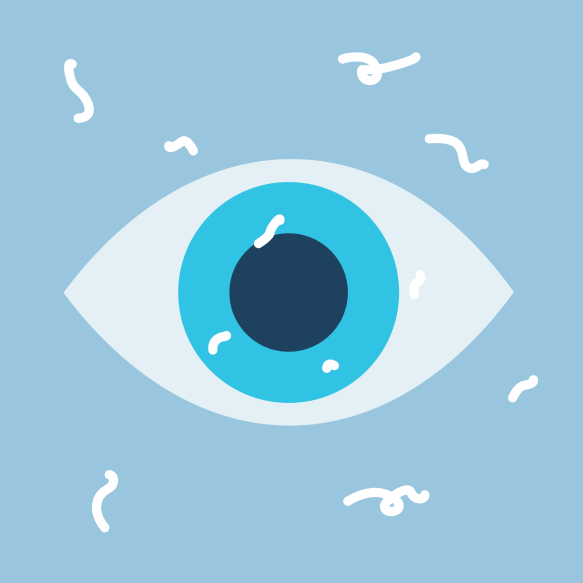
Eye floaters are little, dark or transparent shapes that hang out in your field of vision. They’re often most noticeable when looking at something bright, such as the sky or a light.
What Do Eye Floaters Look Like?
There are various forms of eye floaters—people may experience them in different sizes and shapes. At times they may appear to be tiny specks, dots, or circles. They may also appear as lines or look like cobwebs. Sometimes eye floaters are black or grey, but other times they can even be translucent.
Find the best frames for your face.
With Advisor, get recommendations based on your facial features and personal style—just like you’re shopping in-store.
Floaters often seem to drift about. For instance, these floating dots in your vision may appear to dart away if you try to look directly at them. And if you keep your eyes still, floaters may sometimes seem to drift across your field of vision.
What Causes Eye Floaters?
Eye floaters occur naturally with age.
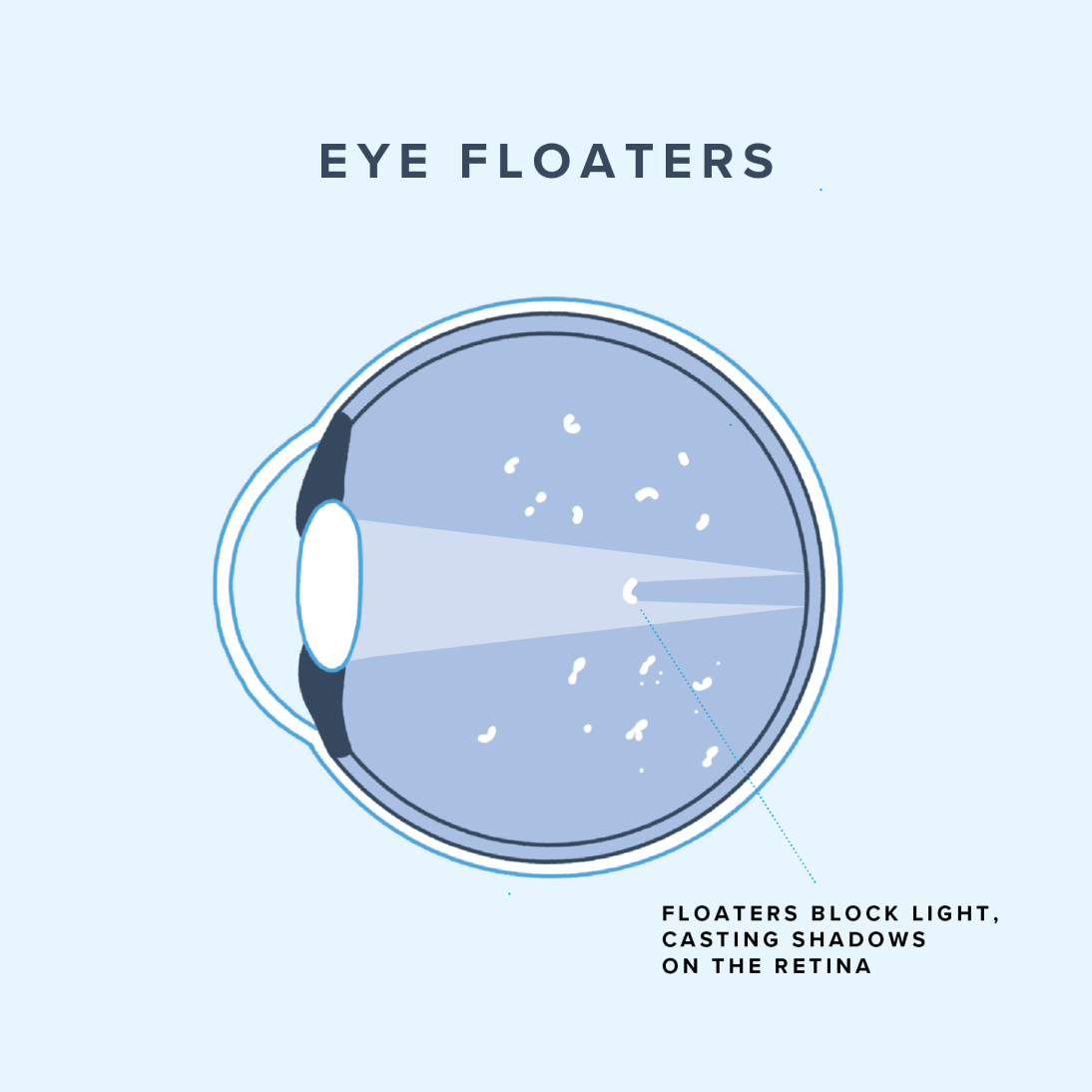
As you get older, the vitreous (a gel-like substance that fills the majority of the eye) changes—it starts to liquify and contract, pulling away from the inner surface of the eye. When this happens, the protein fibers in the vitreous can clump together. These clumped fibers can block light that enters the eye, causing you to see dark spots in your vision.
In other words, when you see eye floaters, you’re actually seeing the cast by these particles in your vitreous.
Other Causes of Eye Floaters
Although floaters in the eye can increase naturally with age, they can sometimes be worrisome as they could indicate the first sign of more serious associated conditions.
This is a commonly asked question, but no—eye strain doesn’t cause floaters. Although eye strain symptoms can sometimes affect vision (it may cause blurriness or light sensitivity, for instance), it isn’t the reason that you are seeing floating spots or squiggles.
When To See a Doctor for Floaters in Your Vision
Most of the time, eye floaters are natural and aren’t a cause for worry. However, since floaters can sometimes be caused by an underlying issue, you can always consult your eye doctor when new floaters suddenly appear in your vision.
If you notice several sudden floaters in one eye, flashes of light, or a dark or blurry curtain-like effect anywhere in your field of vision, these could be signs of a more serious issue. Such symptoms could indicate a retinal tear or detachment, which is a medical emergency. If you notice any of these symptoms, go to the emergency room or see an eye doctor immediately.
Eye Floaters Treatment
In most cases, eye floaters aren’t very noticeable and don’t require any treatment. But if floaters are being caused by an underlying condition, then your doctor may recommend treatment.
In the rare event that floaters are affecting your vision enough to impact your daily life, then you can discuss treatment options and their risks and benefits with your eye doctor. Surgery isn’t a guaranteed cure for eye floaters and isn’t without risk, so it is often only considered in severe cases.
If you’re wondering how to get rid of eye floaters because they’re new to you and distracting, don’t fret. For most people floaters become less noticeable over time. You may not even see them at all after a while!
Seeing Floaters in Your Eyes?
The takeaway here is that seeing floaters is a normal, natural phenomenon as your eyes change with age. But be sure to let your eye doctor know about new eye floaters and if you have any concerns. Keeping up with regular, annual eye exams is the best way to stay on top of your overall eye health.
If you have any lingering questions, don’t hesitate to ask your eye doctor.
The doctor will see you now
Get your annual eye exam from an expert optometrist at a nearby Warby Parker store.