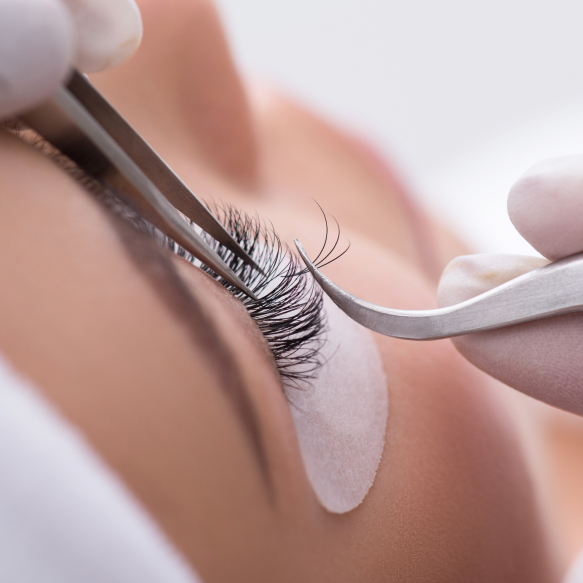
Like other eye cosmetics, eyelash extensions themselves are generally safe—if they’re used properly—but using them is not without risk. While lash extensions themselves may not pose a threat to your eye health, factors such as mishandling, poor application technique, and even ingredients in their adhesives are where some safety issues may lie.
In this article, we’ll break down the potential dangers of eyelash extensions in more detail, and we’ll offer tips for reducing risk.
Eyelash Extensions Risks
You may be asking: why are lash extensions bad? What could possibly go wrong?
Eyelash extensions pose a risk for:
- Allergic reaction
- Infection
- Injury to the eyelid or cornea
- Irritation
- Loss of eyelashes
To better understand these risks, we have to consider what’s causing them. The health risks that are associated with eyelash extensions can be influenced by factors such as:
- Improper maintenance or care: You’ll likely receive aftercare instructions for your lash extensions. Certain missteps in their care could weaken the adhesives or tug at your lashes.
- Long-term use: It’s possible that over time, repeated applications can cause damage to your natural lashes because of the constant excess weight the extensions put on them.
- Unhygienic practices: Applying eyelash extensions requires work around your eyes, but if hygienic practices aren’t followed, the products and tools used may become contaminated with harmful bacteria. That bacteria could be transferred to your eyes and cause infection.
- Mishandling products or tools: Using improper methods for applying or removing lash extensions could cause injury to the eye, eyelid, or natural lashes. It could also spread substances where they don’t belong.
- Substances used in application and removal: Lash extensions are applied using adhesives and removed with solvents—both of which may contain chemicals and substances that could trigger allergic responses like swelling, itching, or irritation. Keep in mind that eyelash extensions and the adhesives used to apply them aren’t regulated by the Food and Drug Administration (FDA).
Ways To Reduce the Dangers of Eyelash Extensions
If your heart is set on eyelash extensions, there are steps you can take to help minimize the risks.
1. Go to a Reputable Salon
Rather than simply heading to the salon closest to you, do your homework first. Check out their reviews and ratings. Look up how long they’ve been in business. And instead of booking an appointment sight unseen, stop by for a visit first—is the salon clean? Do their practices seem sanitary?
2. Work With a Licensed, Experienced Professional
In addition to finding a reputable salon, make sure that your technician is a certified esthetician or cosmetologist. Ask about their training and experience, and request before and after photos of their work. Additionally, ask them what steps they take to ensure good hygiene during application and removal of eyelash extensions.
3. Check the Ingredients of Adhesives
Before the day of your appointment, visit the salon and ask to see the ingredient list for any adhesives they use. Check for known allergens like formaldehyde. (Yes, some glues use formaldehyde!) You can also ask to have a patch test of the glue on your arm or wrist—this will allow you to check for allergic reactions before they apply adhesives near your eyes.
4. Follow All Care Instructions
You should receive instructions for what to do before and after your appointment. Be sure to familiarize yourself well with care instructions and follow them.
For instance, your instructions may advise against getting your extensions wet for 24–48 hours after application. Excess moisture could weaken or spread the glue. Other directions may advise against actions that could tug on the extensions (like sleeping on your stomach, rubbing your eyes, or using an eyelash curler). Tugging on lash extensions could break your natural eyelashes or even cause lasting damage to the follicles.
5. Consider Safer Alternatives
Of course, most eye care providers would prefer that you choose alternatives to eyelash extensions. The best way to reduce your risk for the dangers of eyelash extensions is to opt for safer alternatives like volumizing mascaras or magnetic lashes.
Who Should Not Get Eyelash Extensions?
You should avoid eyelash extensions if you have known skin sensitivities or reactions, or if you have any eye problems or disorders that affect your eyelids, tear film, or the meibomian glands in your eyelids. Some examples include:
- Blepharitis
- Contact dermatitis
- Dry eye syndrome
- Stye
Still Have Questions?
If you have any other questions about eyelash extensions and their safety, you can always reach out to your eye doctor. If you decide to get eyelash extensions, just remember to do everything you can to lower the possible health risks.