Many people experience eye floaters at some point in their life—those pesky spots or eye squiggles that seem to hover or drift across your field of vision. But why? What are they, and where do they come from?
If you want to know more about floaters, you’re in the right place—this article will answer these questions and more. Let’s dive in.
What Are Eye Floaters?
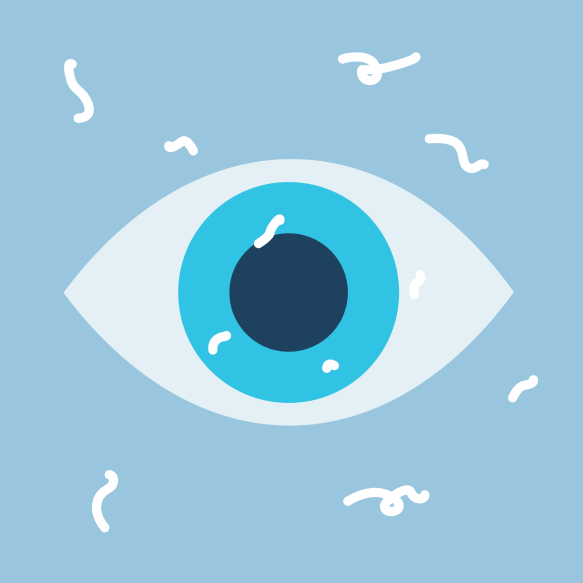
Eye floaters are little, dark or transparent shapes that hang out in your field of vision. They’re often most noticeable when looking at something bright, such as the sky or a light.
What Do Eye Floaters Look Like?
There are various forms of eye floaters—people may experience them in different sizes and shapes. At times they may appear to be tiny specks, dots, or circles. They may also appear as lines or look like cobwebs. Sometimes eye floaters are black or grey, but other times they can even be translucent.
Floaters often seem to drift about. For instance, these floating dots in your vision may appear to dart away if you try to look directly at them. And if you keep your eyes still, floaters may sometimes seem to drift across your field of vision.
What Causes Eye Floaters?
Eye floaters occur naturally with age.
As you get older, the vitreous (a gel-like substance that fills the majority of the eye) changes—it starts to liquify and contract, pulling away from the inner surface of the eye. When this happens, the protein fibers in the vitreous can clump together. These clumped fibers can block light that enters the eye, causing you to see dark spots in your vision.
In other words, when you see eye floaters, you’re actually seeing the cast by these particles in your vitreous.
Other Causes of Eye Floaters
Although floaters in the eye can increase naturally with age, they can sometimes be worrisome as they could indicate the first sign of more serious associated conditions.
Some specific eye disorders and diseases that may cause you to notice more floaters include:
- Detached or torn (or otherwise damaged) retina
- Diabetic retinopathy
- Eye injury
- Eye surgery, such as cataract surgery
- Eye tumor
- Inflammation and/or bleeding inside the eye
- Nearsightedness
- Posterior vitreous detachment (PVD)
- Retinal infections