Disclaimer: Sponsored content.
Many people know that having myopia means being nearsighted—that distant objects appear blurry. What many people don’t know? That myopia is often diagnosed in children, and with treatment, myopia progression can actually be slowed.
But what does myopia management involve? And why is it important? Read on, and let’s take a closer look at what you need to know.
What Is Myopia Management?
“Myopia management” refers to various methods that eye doctors use to slow down the progression of myopia in children to keep it from getting worse quickly. These methods can include treatments like specially designed myopia control glasses, eye drops, hard contacts, or soft contact lenses such as MiSight® 1 day. (We’ll discuss myopia treatment more in a bit.) The key thing to know about myopia management: It’s more than just throwing on some prescription glasses or contacts to function and see clearly.
A myopic eye is more elongated from the front of the eye to the back. This happens when the eye grows at a faster rate than usual. Some children who develop myopia have what’s called progressive myopia, which means the eyes continue to stretch and grow longer. The nearsightedness continues to worsen rapidly, particularly in young kids.
Can Myopia Be Reversed or Cured in Childhood?
No, myopia can’t be reversed or cured—it can only be slowed down and, in some cases, kept from getting worse. Studies show that the majority of myopia progression occurs in childhood (prior to age 16) when our bodies are still growing (and myopic eyes are still stretching).
Why Is Myopia Management Important?
So, why does myopia management matter? If it can’t be reversed, then isn’t it just a matter of having a stronger prescription? Not at all—myopia management is all about looking out for your child’s future eye health.
When myopia is diagnosed in children, it sometimes progresses rapidly—at times up to .25 diopters every six months. So, the younger a child is when diagnosed, the more advanced their myopia may become, with a greater chance of developing high myopia (severe nearsightedness with -6 diopters or more of spherical correction).
Myopia management can lead to lower numbers for the resulting eye prescription and, most importantly, a lower risk of developing sight-threatening eye diseases and other eye health issues. Lower prescription numbers also mean:
- Thinner lenses and better quality of life
- Less-frequent changes in prescriptions during childhood
- More reliable results for laser surgery in the future (while laser surgery might improve vision, it can’t change the shape of myopic eyes or “fix” the issue)
To sum that up: The bottom line is that early myopia management in children can help safeguard them from moderate and high levels of myopia and an increased likelihood for sight-threatening eye diseases such as retinal detachment.
Myopia Treatment Options
Ok, so what can be done to slow the progression of myopia in children? Treatments most commonly prescribed include myopia control glasses, myopia management contact lenses, or medications such as eye drops.
Contact Lenses for Myopia Control in Age-Appropriate Children
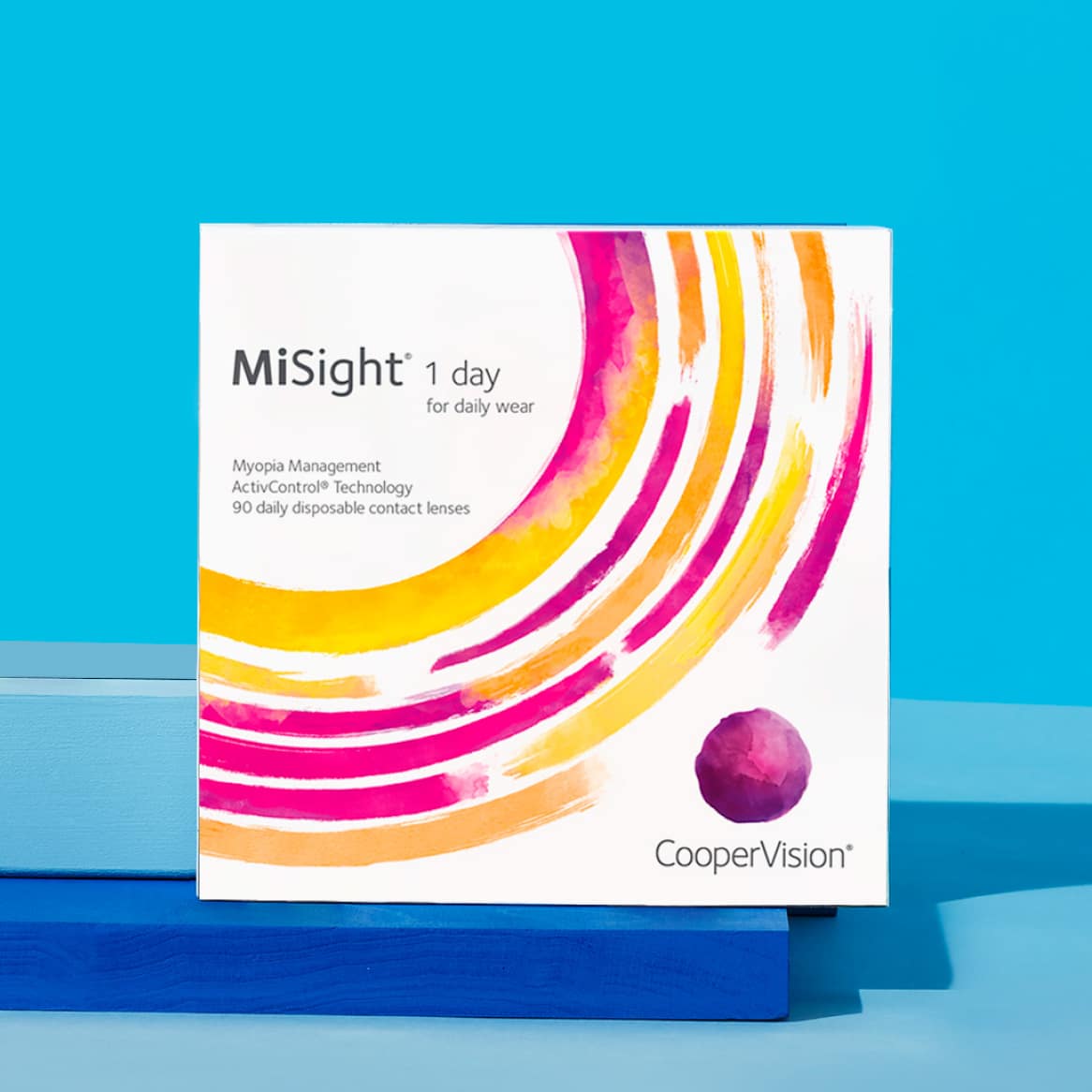
Certain contacts are highly effective for myopia control. For instance, MiSight® 1 day are soft contact lenses that have been FDA-approved for slowing the progression of myopia in children ages 8-12 at the initiation of treatment.±*1 These lenses use ActivControl® Technology to correct nearsightedness while also slowing its progression.*1
These contacts not only give age-appropriate children freedom from glasses for their active lives but also have been clinically proven to slow myopia progression.*1 Look for a MiSight® 1 day-certified eye doctor near you to schedule an exam.